Friday, 23 May 2014

Short Story Quickie


I do occasionally read short stories, usually with my online book group. When I was a child the only reading done in my father reading the newspaper and my mum who read The People’s Friend which I am astounded to find still exists today. It was and is a magazine aimed at women, and in those days aimed at housewives, and packed full of craft and cooking articles side by side with short stories. I don’t think I picked up another short story until I was in my 40s, in the days before ipads, tablets and mp3 players, when I would do long car, train or plane journeys for work and especially with car journeys could end up sitting outside a client site for 30 minutes or so having arrived too early for my appointment. Poetry and short stories were a great gap filler.

Now as I say I read them mainly with my online reading buddies, but whereas I review and log my other reading here I never say anything about the short stories I read. So I am going to rectify this immediately with the tag “Short Story Quickie”. I will give a very brief comment on the story, (purely my opinion on first reading), the usual link to more from the author and, if I can find one, a link to where you can read the story.

I reckon as a rule of thumb short stories take anything between 10 and 60 minutes to read – so great for when you are sitting down with a good cup of tea. They are also a great way to test out an author you haven’t read before. Please post back if you follow up on one to read.

Look for the first posting under this new tag in the next couple of days.

Wednesday, 21 May 2014

The right to a life

Cries Unheard: Why Children Kill: The Story of Mary Bell

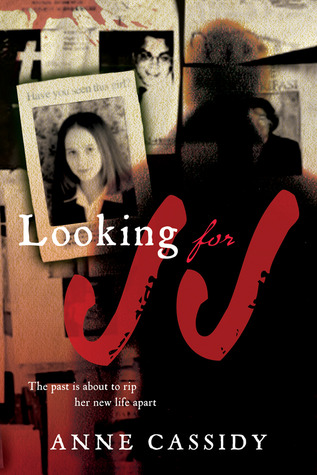
Looking for JJ (Jennifer Jones, #1)

Finding Jennifer Jones (Jennifer Jones, #2)

Cries Unheard: Why Children Kill: The Story of Mary Bell

by Gitta Sereny

Looking for JJ
by Anne Cassidy

Finding Jennifer Jones

by Anne Cassidy

My in person book group has been reading a pairing of books, Cries Unheard and Looking for JJ, to which I added in its sequel Finding Jennifer Jones. Cries Unheard is Gita Sereny’s account of her conversations with child killer Mary Bell while Anne Cassidy has written a fictional account of a child killer trying to establish an independent adult life after release.

I found the Sereny book quite disjointed to read which surprised me for a serious writer on the serious topic. It was repetitive and uncoordinated and although this in part may reflect Bell’s own recollections and outpourings to Sereny, her account and professional analyses of these meetings and conversations  could have been presented in a much more concise fashion to support her argument against the way our justice system treats such children.

Cassidy’s novel is fiction; and let’s be clear, it is not a fictionalised account of the same people or incident. However, she does touch on many of the same issues and themes as one reads about in Sereny’s book  including the socially marginalised home environments of the children and the endless intrusion of the paparazzi of the gossip press. Whilst Sereny’s book also covers the period of Bell’s incarceration in children’s facilities and subsequently in mainstream adult prisons, Cassidy’s story  largely bypasses that part, telling of what led up to the incident and concentrating on the period following the killer’s release into the community and her attempt to establish a normal life. Whilst I did not particularly like the optimistic ending to the sequel, thinking it too forced, I understood why Cassidy would want to give hope to her character.

Together these books raise questions about society’s responsibility for children who find themselves at breaking point and, not knowing how to manage their situations, end up with behaviour which has life changing consequences. The tabloid press would have us believe that these children are innately evil, that they have no place in the ordinary world and no right to life haven taken one. Sereny does not believe this and neither, I suspect, does Cassidy. I was struck by how Cassidy wrote her killer’s surviving childhood companion, Lucy, who as an young adult has put the incident behind her and almost dismisses it out of hand with a ‘we were just children’.

The reader can see where society has failed these children prior to the killing, afterwards during their trial and incarceration and after they are released back into the community. Most readers will be appalled by the fact that Bell received little or no psychiatric care or help during her period of detention. As Sereny points out it is no one’s responsibility to find out why something happened – the police are only concerned with finding the killer, the courts with convicting or acquitting the person, the jail system with keeping them inside to serve their sentence.  Equally many readers will know of the extraordinary and commendable lengths Bell has gone to in order to protect her daughter from press intrusion. As Cassidy’s novel shows, Jennifer’s past is but a recognition away – be it from a freelance journalist, or someone connected with the original incident who seeks the opportunity to make some money out of it.

ashramblings verdict Sereny 2* Cassidy 3* but together I think they are greater than the sum of their parts and would recommend them as a trio.

Tuesday, 20 May 2014

The cutting edge

For this week’s exercise for my Creative Writing class our tutor came with a selection of scientific photographs. He used only the more abstract ones from his vast collection. I did recognise some – the surface of a plant, a fungal spore – so picked one I did not know.

I only had my mobile phone with me so the resultant photograph is not too good, reflecting the library overhead lights, but hopefully good enough that you get the gist.

The brief for our writing was to think differently, almost like a Martian would. I didn’t take the visitor from outer space theme too literally but here is my effort.

At the bottom of the post I will tell you what it actually is and post a better picture.

Cutting edge


The cutting edge

This is a strange place. Directionally confused, every which  way I look it is the same. The madness of regularity, row after row, pattern repeat after pattern repeat, 2 this way, 2 that, 2 up, 2 down, packed tight pointed roofs, a log pile of stacked boxes. Moving over them I slip down onto their crevasses and am grazed by their edges. I loose my footing and end up looking upward like a Kaffir on a bed of nails. Held fast. The walls encroach at a slow, steady, unrelenting pace. They nudge onwards, ever closer the advancing army of swords pointed towards me, their prey. The double edge serrations bite deeper, shredding my soul. The machine annihilates all in its path. I am but dust.


In reality the picture is of an Anechoic Chamber - An anechoic chamber (an-echoic meaning non-reflective, non-echoing or echo-free) is a room designed to completely absorb reflections of either sound or electromagnetic waves. They are also insulated from exterior sources of noise. The combination of both aspects means they simulate a quiet open-space of infinite dimension, which is useful when exterior influences would otherwise give false results. You can see lots of better examples here