Showing posts with label British Literature. Show all posts

Tuesday, 26 December 2023

Book Review: The Wall by John Lanchester

The Wall The Wall by John Lanchester
My rating: 4 of 5 stars

I first heard part of this book abridged on BBC R4 and only recently managed to sit down and start it in earnest. Dystopian fiction, a world after what is only known as The Change, after which sea levels have risen dramatically and Britain was built a defensive perimeter Wall round all its shoreline to keep out the Others. Lanchester creates well his bleak world where people man the wall as sentries for years at a time,where the Others try to scale it, those who succeed are chipped and put to work as Help, those that don't die, the sentries on duty when there is a breach are sentenced and put to sea. Kavanagh is our narrator as he begins his two year stint on the Wall.
This an addictive read, with good world building and a steadily building up storyline. The compelling book was longlisted for the 2019 Booker and deservedly so.


Wednesday, 22 November 2023

Audio Book Review: The Second Sight of Zachary Cloudesley by Sean Lusk

The Second Sight of Zachary Cloudesley The Second Sight of Zachary Cloudesley by Sean Lusk
My rating: 3 of 5 stars
This is a first novel and as such was quite impressive. Historical setting, tinges of steampunk - clockmakers, spies, incarceration in a Sultans palace, a son's search for his father, Dickens like characters - Mrs Morley was excellent and very well characterized and read on the audio by actress Clare Corbett (https://voicecall-online.co.uk/female...) , Tom Spurrell, clockmakers assistant extraordinaire, with the male characters by Bert Seymour (https://www.voicebanklondon.co.uk/art...) . I thought the story well crafted. An enjoyable read. Will be keeping an eye open for his next novel.

View all my reviews

Tuesday, 10 January 2023

Book Review: The Cockroach By Ian McEwan, narrated by Bill Nighy

The Cockroach

The Cockroach by Ian McEwan
My rating: 2 of 5 stars


When I started reading this novella from Ian McEwan I was reminded of the classic The Metamorphosis by Franz Kafka, but very quickly the notion of a homage was dispelled and we are into the realm of political satire. 

****SPOLIER ALERT****Jim Sams, UK PM has been transformed into a cockroach yet, but he is still PM, in modern day Britain but not quite as we know it, although everything sounds familiar. Reversalism rules, reverse-flow economics is the norm and the traditional money markets preferred by the 'Clockwisers' are no longer in power, now people have to shop to afford to buy their jobs. The previous PM in order to placate the Reversalist wing of the Tory Party had called a Referendum on reversing the money flow. The old and the poor swayed the vote and faced with "Turn the Money Around" upswell he 'resigned immediately and was never heard of again' .

James Sams a clockwiser had emerged as a compromise candidate now had to guide a Reversalist economy in a Clockwise world. ' we will deliver Reversalism for the purpose of uniting and re-energising our great country....by 2050... the UK will be the greatest and most prosperous economy in Europe....we will move swiftly to accelerate and extend our trade deals beyond St Kitts and Nevis.... '
Any Brit will hear resounding in her ears echoes of the misjudged Cameron EU Referendum .

James wrestles with his first Tweets, tries to get the US President to adopt Reversalism, there's a fatal fishing dispute with the French, a leak and a Foreign Secretary called Benedict that needs dealing with. A false story is planted by a female colleague with the media to discredit and shame the Foreign Secretary who then has to resign and goes off to lead the rebels.

With the ultimate passing of the Reversalism Bill, James in his speech says "we have come to know the preconditions for such human ruin. War and global warming certainly and, in peacetime, immoveable hierarchies, concentrations of wealth, deep superstition, rumour, division, distrust of science, of intellect, of strangers and of social cooperation."

One can't but feel McEwan enjoyed writing this book, and from a reader's perspective it is short, speedy read which occasional bring sly smiles to one's face, but is it a great piece of creative writing?, I felt McEwan struggled to maintain his PM as cockroach character and Sams reverted to the PM as human in this reader's mind for large parts of this book. Maybe it is a book that inevitably had to be written. Could it have been written with the same of better effect without the cockroach transformation? That I feel that could have been a better book. Sadly, not one of McEwan's better books - for me an interesting idea that didn't quite work.

I listened to the audio version admirably read by Bill Nighy.

Wednesday, 15 June 2022

Book Review: Songbirds by Christy Lefteri

Songbirds

Songbirds by Christy Lefteri
My rating: 4 of 5 stars

First some facts
(1) In Cyprus, an estimated 605,000 migratory birds were caught in mist nets and killed in the autumn of 2021 to lace the diner plates in fancy restaurants and homes - see https://www.rspb.org.uk/about-the-rsp...

 
(2) The UK issues over 20,000 Overseas Domestic Worker Visas per year to people coming from outside the EU https://gal-dem.com/overseas-domestic... , https://www.thevoiceofdomesticworkers...

(3) It is very common for migrant women to work in domestic servant jobs in middle class Cypriot homes. In 2019 the body of one was found and with it a multiple murder investigation into the disappearance of 5 woman and 2 children https://en.wikipedia.org/wiki/Mitsero... their hopes for a better life brutally ended.

Lefteri, herself from a Cypriot family, weaves a rich brocade of a story around the fictional disappearance of Nisha, a maid from Sri Lanka, a widow with a young daughter back home whom she has not seen for 10 years. For those 10 years she has served Petra, herself a widow and brough up her daughter. Nishi and Yiannis, the tenant in Petra's upper flat, are lovers. Yiannis confesses to her that following the bank crisis he lost his job and has ended up catching birds. They both live on the edge of complex, far reaching and in Yiannis's case illegal, operations. Their love affair remains hidden as Nishi fears losing her job and being unable to repay her 'arrangement' fee.
The story alternates chapters from Petra and from Yiannis as Nishi's story is released to the reader. As I started to read this I was struck by how involved I felt in the story even although the final outcome of Nishi's death is all to apparent from the start, but my involvement all the more surprising because I disliked both the bird hunts and the attitude of Petra to her maid. We know Yiannis will finally break from his bird hunter role, that he will go and see Nisha's daughter in Sri Lanka, and that Petra will finally see the wealth of love that Nisha brought into her and her daughter's life. We also see the horrid nationalistic racist misogynistic attitude of the police who will not investigate Nisha's disappearance and who did not investigate the initial reports of the disappearances of the women murdered in Cyprus. Interspersed with these two character’s chapters is the story of the hunter, the Red Lake and a dead hare. It is beautifully crafted and well worth a read. The excellent audio version is narrated by Indira Varma, George Georgiou, Art Malik and Lolita Chakrabarti. Totally compelling read, Highly recommended


View all my reviews

Monday, 16 May 2022

Book Review: China Room by Sunjeev Sahota

China Room

China Room by Sunjeev Sahota
My rating: 4 of 5 stars 

Beautiful. One thread is the heart wrenching story set in 1929 Punjab of 15 yr old Mehar's misreading of who is her husband - how can this happen? she is one of three young wives to three brothers, all ruled over by the strict, often callous, family matriarch. The girls live together in a small room, and are veiled at all times, in absolute segregation. But Mehar is inquisitive and thinks she has worked it out. Intertwined with this is the modern storyline where a teenage recovering addict from the UK visits family in modern Punjab.

In what I think is one of the most honest author video interviews I have watched Sahota tells how a story from his own family gave rise to Mehar's, how structure is all important to him when writing. That structure, apparent to some extent when I read the novel, is one of the two threads circulating each other,  spiralling closer and closer, with shorter and shorter chapters building reader tension as he explores social and pyschological imprisonment and escape. Personally, I found Mehar's story by far the strongest, but at the same time the reflections of it in the modern line cleverly bring out more than the sum of the parts.

This is his only third novel, he is now an Assistant Prof teaching Creative Writing at Durham Univ in England. I read his second [book:The Year of the Runaways|42200524] which I thought was marvellous - see my review . It is clear that Sahota can write both men and women characters, in stories which totally engage the reader. Now I really must go and read his first [book:Ours Are the Streets|9826870].

Highly recommended

Friday, 31 December 2021

Book Review: Sweet Caress by William Boyd

Sweet Caress Sweet Caress by William Boyd
My rating: 4 of 5 stars


Should I have been surprised that I liked this novel? Not really, in that I have read other William Boyd books and enjoyed them, particularly Restless, but on the whole I am not irreversibly and constantly drawn back to them or him and I really don't know why that should be. And so it was that I sat down to read this one, chosen by my in person book group, expecting a good read nothing more, nothing less. In some ways that is exactly what I got, but it surprised me in just how addicted I was to his character. I really liked this woman, Amory Clay, who for all her thoughts about her so called 'mistakes' she had made in her life seemed to me to have had a good and fulfilling life . She went with the flow, experienced what life flung at her and moved on. A woman in control or a woman being buffeted by life's seas? Or perhaps it doesn't matter. She had experiences, good and bad, but it is a life I would not have minded living even though she was born half a century before me. She is a character that will stay with me and that cannot be at all bad for any author to have achieved.

I listened to the audio version, superbly read by Juliet Stevenson.

Monday, 13 December 2021

Book Review: Prague Spring by Simon Mawer

Prague Spring Prague Spring by Simon Mawer
My rating: 3 of 5 stars

Having just read and studied my way through the confusing, infuriating and interesting Kazuo Ishiguro book The Unconsoled, I needed a quicker, more straightforward read, something with a plot and a compelling storyline. My face-to-face book group chice for this month provided the answer - Simon Mawer's Prague Spring.

Set in 1968, the year of change when for a brief moment Czechoslovakia need had its legendery Spring. Mawer weaves two threads neatly together, one of British students James and Ellie hitching across Europe, their route chosen with the toos of a coin and the other of diplomat Sam based in Prague and his Czechoslovakian girl friend Lenka. Throughout every relationship is hanging by a thread, the big question is which way will it go, like James and Ellie's coin toss - their 'are they friends/are they lovers' relationship, will Sam forget absent girlfriend Steffie now back in UK and fall for Lenka, will the Russians invade or not, will Czechoslovakia get its dream of Communism with a human face?

Always difficult to cast a plot when answers to some of the major questions are known by readers in advance, but Mawer does this quite well , he does his research and doesn't overpower the reader with the historical background or the occasional foregrounding of characters future histories. His prose sweeps you along, perhaps with the optimism of those tasting freedom for the first time, but lags a bit in the middle third before gathering itself back into a pacey finale. An entertaining , easy read.

Thursday, 9 December 2021

Book Review: The Unconsoled by Kazuo Ishiguro

The Unconsoled The Unconsoled by Kazuo Ishiguro
My rating: 3 of 5 stars

This is an infuriating read, the reader is never in empathy with any of the characters. There is so much going on and yet nothing happens. There is very little in the way of storyline, plot, everything is totally fluid - space, time all slip in and out, back and forth, left and right, up and down, through triggers acting as jumping off points for memory shifts, spatial shifts, mood shifts - like a multidimensional maze.

I had once before started to read this book and got 2/3 of the way thorugh before it was packed up with all my goods and transferred to a shipping container to come back to the UK. I got back to reading it only as part of a retrospective on Kazuo Ishuiguro's works. We had some great discussions in the course group about this book, but I think out of the 6 of us only 1 liked it although even that person said she feult anxious all the way through, and the tutor who was on his 3rd read of it.

We discussed its dreamlike qualities, the absurb nature of many of the images within the book, Ishiguro's own commment that is was a metaphor - for what? , we discussed deferred and displaced anxiety, success and failure, domestic v profession lives and personas. We discussed whether the book is dreamlike, whether the various characters are aspects of the main protagonist Ryder's character transposed onto others, or him at various points in his life eg Stephan as the young Ryder, Brodsky as an elder one, whether the book is a metaphor for death/ approaching death, whether Ryder is in panic mode, confused, or mad, whether the town is a psychiatric hospital, the tram car and the electrician a Men's Shed for rehab. We discussed whether this was a backlash by Ishiguro over frustrations at readers (or critics?) lack of understanding of his earlier works seeing the first two A Pale View of Hills and An Artist of the Floating World as 'Japanese' and The Remains of the Day as an English custom drama mainly because of the interpretation of the book by the movie.

In the end I feel this is a book for the brain, the intellect, not for the heart or the soul. It benefits greatly from a slow, and very close read, but it leaves the reader unsatisfied, unconsoled. (less)

Friday, 27 August 2021

Book Review: Lean Fall Stand by Jon McGregor

I managed at the last minute to catch online the session with Jon McGregor at this year's Edinburgh Book Fest . He is an author I have been meaning to read yet never seemed to get round to him. He was not at all like what I had imagined, younger ( should have done my homework), somewhat hesitant in his words but clear so I concluded he thinks about what is he saying. He spoke about this book which was published earlier this year, about his trip to Antartica as art of his research for it, his experience of teaching creative writing at the University of Nottingham. He is one of the Guardian's 10 writers to see live  I was pleased I did, immediately fascinated by the book, went and bought the audio and borrowed the ebook from my local library very surprised to not find a waiting list for it. The audio version was read by Matt Bates

The book starts of with one old hand Robert "Doc" Wright and two novice youngsters post docs Luke and Thomas arriving at a research station in Antartica. This section is as gripping as any thriller as they are unexpectedly and suddenly caught in a storm with Doc up a hll to provide persective for Thomas' photographs, separated from them he returns to base and ***SPOILER ALERT ***suffers a stroke, Luke makes it back, Thomas does not.

The second section transfers us to England, to Robert's wife, Anna, how she finds out what has happened, her trip to the hospital in Chile, their return home, the impact of the incident on her life. Robert is trapped behind a barrier to the articulation of words. How often have we ourselves said "we'd been lost for words", unabe to explain or recant something. My own father, had several strokes, first loosing the ability to communicate and then to move. Reading this section I found myself thinking back to how my own mother must have been in Anna's position, how on earth did she cope and to the unsaid frustrations that must have been going on in my father's head as he struggled to make himself understood. McGregor writes these very well, quite realistically in my opinion.

The third section is in many ways about bravery. Robert gets discharged and ends up going to group sessions for asphasics which address communication through non standard means such as movement, sound, strategies for communicating that circumvent the word that cannot be found and said. Robert initially resents and doesn't want to be at the group. Many would say he was brave going of to the Antartic for months every year, that Anna was brave to soldier on without him, bringing up their children, repairing their house, having her own career, alone for long peroids of time. But this section is about the bravery of tackling the loss of the ability to undertake that most fundamental of human activities, namely to tell stories, to tell another person what you had done in a day, to say how you feel, to ask how they are, to respond to their stories all because you have lost the ability to speak, and to make progress towards communication.

This is a book that will stay with me for a long time. I thought it was extremely well written, with an insteresting construction of being part like a thriller, part an insight into how people recover from brain injury and how it effects their family, from mapping the terrain of the Antartic contenant to mapping the terrain of recovery this book has exquisite word use, for example some of the distorted word grouping that the group members say are rhythmic others poetic as they grapple with the complexity of language, McGregor writes it beautifully. I couldn't put the book down. Highly recommended.

Monday, 23 August 2021

Book Review: The Mermaid of Black Conch by Monique Roffey

The Mermaid of Black Conch The Mermaid of Black Conch by Monique Roffey
My rating: 3 of 5 stars

Great storytelling on the themes of love, loss, loneliness and transformation. I listened to the audio version narrated by Vivienne Acheampong who reads the sections voiced by the mermaid Aycayia and Ben Onwukwe who reads the main narration by David the fisherman who rescues the mermaid caught by the tourist fishermen from Florida who see "it" as part of their catch,theirs to sell to somewhere like the Smithsonian and getting their hotos on the cover of Time Magazine. David takes Aycayia home expecting to return her to the sea, but she changes back into a woman. This basic storyline - outsider allows group to understand itself - are the stories of other islanders also suffering their own losses and lost loves. It is a beautiful read which won the Costa Book of the Year Award for 2020.

View all my reviews

Tuesday, 29 June 2021

Book Review: Meet Me at the Museum by Anne Youngson

Meet Me at the Museum Meet Me at the Museum by Anne Youngson
My rating: 4 of 5 stars


This was a pick for my in personbook group. Probably one I would not have picked up, BUT.
I've read it describe in what could be construed to be saccharin terms - ' a gem of a novel' ' a charmer' and yes those do apply, BUT.
The book is written by a Brit in her 70s who had never written a book before , BUT. ( you can see there is a pattern here!)

It is an epistolary novel, a series of letters written between two grandparents with grown up children - Tina, a farmer's wife, best near Bury St Edmonds in Suffolk, who is mourning the loss of her best friend and Anders from Denmark who works as a curator in the Silkeborge Museum, who is recently widowed. Their correspondence is something of an accident. Tina and her friend had always talked about going to see the Tollund Man, immortalised in the poem by Seamus Heaney because according to this storyline been among the group of school girls to whom the Danish archeologist Prof Glob who excavated Tollund Man had dedicated his book on the subject entitled The Bog People. In her grief Tina writes to him, but he is long since dead and Anders replies instead. There begins a totally rivetting 18 month corrrespondence between the two.
Through their letters they unwind and take increasingly openly about their different lives, their loss, their marriages, their children. They philosophise about the choices which took them to where they find themselves in their lives and as they do so their letters move from the formal opener of 'Dear Mrs Hopgood' to 'My dear Tina', from the friendly but respectful closure of 'Best wishes' to 'All my love'.

Youngson creates to distinct voices - Anders is very matter of fact, analytical, his English style of writing echoing his hestitancy in life but as the correspondence continues his confidence with English reflects his rise in confidence in his life. Tina is concerened about decisions and choices she made which led to her marriage, to her living and working on a farm, and about what she has missed out on. The reader gets quite an insight into the life of a farmer's wife. Youngson's uses a great metaphor for second chances which she gives her characters provides a framwork for their discussion of whether the fruits of life have been overlooked as result of decisions, keeping the peace etc. Their correspondence helps them both, and they each provide encouragement and enthusiasm for the other's thoughts, feelings and dileemas. They way she tells the story and develops here characters through their written voice is excellent.

It is a delightful book. It is very well crafted. I did pick up on the ending a little before we got here, but that did not in any way detract from it. I loved the way she ended the book *****SPOILER ALERT ***** in a way that says to me she is a confident writer, secure in the strength of her story, the strength of her character development through their distinctive voices, and so not needing to supply prescribed Hollywood ending.

The book was shortlisted for the Costa Best First Novel in 2018 and won the Paul Torday Prize for Debut Fiction by writers over sixty ( I never knew this even existed!) and I would say deservedly so. Most definitely recomended.


Saturday, 5 January 2019

Review: Six Stories and An Essay by Andrea Levy

Six Stories and An Essay Six Stories and An Essay by Andrea Levy
My rating: 4 of 5 stars

I bought the audio book of this some time ago just after reading her book Small Island and never got round to reading it. Now after watching the TV adaptation of her book The Long Song and watching an accompanying Imagine interview of her by Alan Yentob I resurrrected it.

Six stories and an essaay was first published in 2014. The essay covers much of what she covers in many of her interviews abouit her upbringing, her family, her awakening a a Black British Writer.
Each story is prefaced with an introduction by Levy. The first story "The Diary" is one she wrote whilst studying Creative Writing at City Lit in London - the classic creative Writing Prompt "You find a Diary....".

"Deborah" is a totally different voice, of a child, written in response to newspapers of the time being full of the story of child murderers .

The third story is entitled "That Polite Way That English People Have" which is readers' first introduction to the character of Hortense who is central to her novel The Small Island.

The fourth story "Loose Change" reflects on the unease felt in the relationships between immigrants of different times specifically here between a Caribbean one and an Central Asian one from different generations of migrations.

The next, is perhaps my favourite story, a short about people's fear of the Other, the inability to communicate even when speaking a common language because of the fear of the unknown, seeing only differences not commonalities in this case a common wellbeing for children as told by "The Empty Pram".

The sixth story is "February" one of Levy's stories inspired by her mother and written to order for a Waterstones diary.

Weirdly there is a seventh story, entitled "Uriah's War" on an important topic of the Caribeean men who volunteered and served in the British West Indies Regiments during the first World War, expounding their courage and discrimination.

ashramblings verdict 4* Levy is a great narrator! She makes her page words into somethingelse. The narration is a 5* one and if you are inclined to read this book I thoroughly recommend the narrated version, available via Audible.

View all my reviews

Friday, 28 December 2018

Review: Mothering Sunday by Graham Swift

Mothering Sunday Mothering Sunday by Graham Swift


One of my in person book group reads, probably not one I would have been picked up but at only 149 pages it was a great read for a grey winter's afternoon between Christmas and New Year., and I sorta lost myself in it and 3 hours just flew by.

The story is initially set in 1924, a time of change when the landed gentry are trying to come to terms with post war life, their "lost generation", their money problems, their dwindling estates, their changing circumstances. Those born too late to serve are struggling to find their role in the world. Paul Sherringham is one such lost soul. The surviving son from three families who finds himself in a 7 year passionate affair with the maid from a neighbouring house and an upcoming "arranged" marriage of monetary convenience to be made to try and consolidate such families. 

The maid, Jane, a motherless foundling has a kindly position where her ability to read, learnt at her orphanage, and the lack of servants has allowed her to do more than just being a housemaid, and she is permitted to borrow books from her house owner's library. 

The first part of the book revolves around Mothering Sunday, when the families are off to meet the bride's family, and the staff at the various houses have a day off to visit their mothers. Jane's day is very different. She is with Paul. She knows it will be their last meeting, yet ponders possibilities as she lies, naked in his bed in his house, watched and watching him slowly getting dressed and ready for his lunch meeting with his fiancee. She wonders why he is taking so long, long enough to be very late, as if he doesn't want to go, and how he is dressing very well for a lunch meeting. Immediately we have the feeling something is not right. ***SPOILER ALERT*** indeed it really isn't a big reveal when it happens, Swift prepares us very well, subtly showing what he doesn't tell directly, namely that Paul has planned this day to perfection - he has driven his house's maid and cook to the station, clearing the house for his and Jane's only chance at normality. Jane recalls that him saying when talking about the garden path "...with a strange echoing sincerity, 'I won't ever lead you up it.' Their time has been perfect and Paul perfect dress is another part of his plans. He leaves Jane to lock up, eat the lunch cook has left in the kitchen for him, to cycle home to spend the afternoon reading her first Conrad. 

It is a sad story, on one side Jane is totally faithful, she never tells about her relationship with Paul, she goes on to outstrip society's expectation of a maid, first becoming a book shop assistant and finally a best selling author. Paul can make no such breakthrough to the world to come, he is unable to break the bonds of family, the expectations of family, class and society. His faithfulness to Jane has a planned, predictable ending as he crashes his car into a tree en route to his fiancee and dies.
Swift's writing creates a modern woman who grows through literature, writing and love found in the new freedoms of the post war era. Perhaps she loves Paul, but she did not expect. She does honour his love, his gift of that normal day when she was not a maid, when she entered his house by the front door. Swift crafts a truly cinematic pivotal scene where after Paul has left, Jane wanders in naked innocence through the empty house before closing that chapter of her book and cycling back by the garden path and fields to her Conrad, but instead is confronted by the reality of what has happened. 

Just when you think the story has finished it continues and we see Jane as the successful writer, we find out about her subsequent Oxford years, her eventual marriage. The older Jane gives interviews on her work, telling in various forms the tale of her motherless upbringing, with just the same creativity as she pondered various scenarios for Paul explaining to his fiancee why he was so late. A writer's work is often about what is left out, what is not explicitly said, just as Jane does in her interviews, so Swift does in his novella - the untold story told.

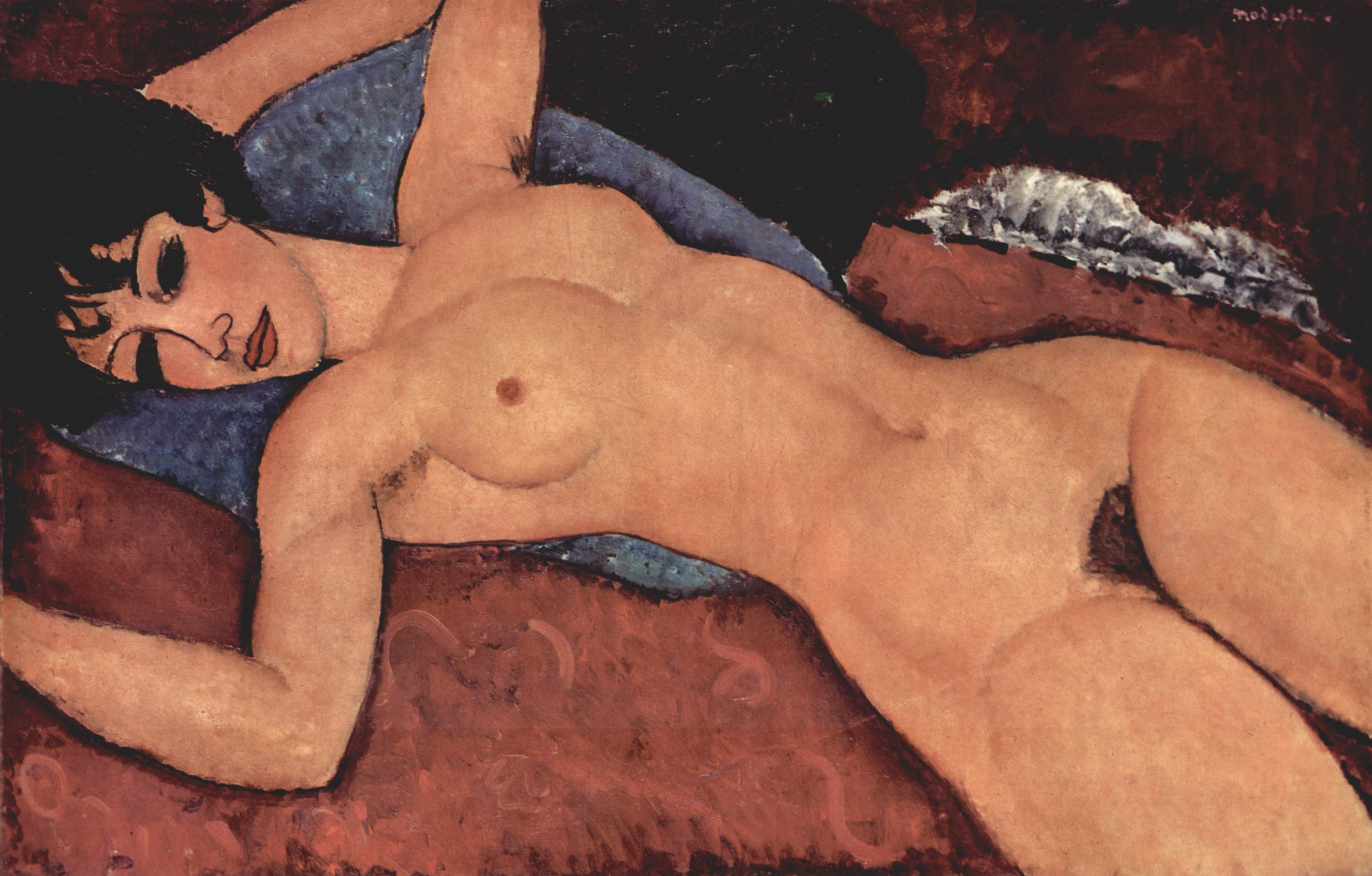
ashramblings verdict 4* I have a feeling it could have been tighter - it repeats itself, but then again this is part of Jane's creative workings at their commencement as her storytelling skills are honed - but this short novella, interspersed with Swift's familiar literary references, will carry you you swiftly (oh!) through and leave you feeling that it is a work of art as memorable as the picture on its cover (Modigliani's reclining nude).


View all my reviews